The Art of the Shelf
How to Style Shelves Like an Interior Designer
INTERIOR DESIGN
12/12/20253 min read
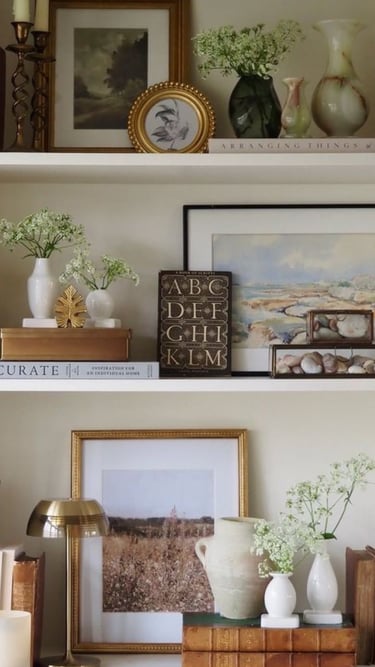
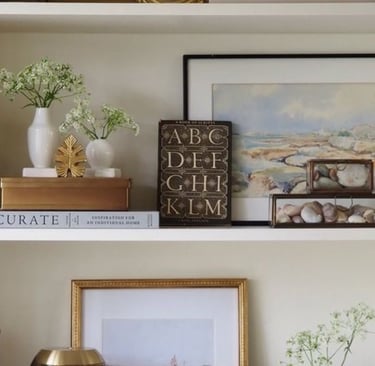
Shelf styling is one of the most impactful ways to elevate your home—yet it’s often one of the trickiest design elements to master. A beautifully styled shelf looks effortless, collected, and intentional… but getting it right can take a bit of strategy.
Whether you're decorating a floating shelf in the kitchen, a built-in in the living room, or a small bookcase in your bedroom, this guide breaks down The Art of the Shelf: how to style shelves in a way that feels aesthetic, balanced, and uniquely you.
1. Start With a Clean Slate
Before you add anything, clear the shelf off completely. This “blank canvas” approach is exactly how interior stylists begin any shelf makeover.
Starting from zero allows you to:
visualize the space more clearly
reset proportions
avoid clutter
rethink old styling habits
2. Establish Your Anchor Pieces
Every beautifully styled shelf has one or two anchor items—larger pieces that ground the eye and create structure. Choose something with presence. Bigger items keep your shelf from looking busy or cluttered. Anchor pieces can include:
oversized vases
large art frames
sculptures
stacks of coffee table books
decorative bowls
pottery or ceramics
3. Layer in Height + Levels
A great shelf has visual dimension.
You can create this by mixing objects of different heights, shapes, and textures.
This variation adds depth and movement, making the shelf feel dynamic.
Try incorporating:
tall vases or candlesticks
medium-height sculptures
shorter bowls or decorative objects
horizontal books for layering
art propped behind smaller objects
4. Mix Materials for Texture
Texture is what takes a shelf from “pretty” to “luxury editorial.” The interplay between matte and glossy, rough and smooth, warm and cool gives your shelf dimension and richness. Aim for a mix of materials, such as:
ceramics
glass
metal (brass, black steel)
natural stone
woven baskets
wood objects
5. Style in Thirds (The Rule of Three)
The “Rule of Three” is a classic interior styling trick. Objects tend to look more balanced and visually pleasing when grouped in threes—especially if they vary slightly in height or scale. The key is balance without perfect symmetry. Example trio combinations:
a vase, a stack of books, and a sculptural object
a candle, a small bowl, and a tiny plant
layered art, a ceramic piece, and a taper holder
6. Use Books Intentionally
Books are shelf styling gold. Books add height, texture, and warmth—all in one. You can:
stack them horizontally
line them vertically
mix the two
top stacks with smaller objects
choose neutral spines for a minimalist look
flip books backward for a softer palette
7. Add Personal + Sentimental Elements
This is where your shelf becomes yours. Shelves feel most beautiful when they look curated over time, not purchased in one shopping trip. Include items like:
travel mementos
framed photos
handmade ceramics
vintage pieces
meaningful objects with stories
8. Leave Breathing Room
One of the biggest styling mistakes is overcrowding.
Great shelving has negative space—areas where the eye can rest.
Whitespace = luxury.
Ask yourself:
Do I see clutter or curation?
Can I remove one or two things and improve the look?
Is each object “earning” its place?
If you love all your objects (like I do) and want to show them all off, you can rotate them out throughout the seasons.
9. Create a Quiet Color Palette
A cohesive color story takes your shelf from chaotic to calming. You don’t need everything to match—just aim for tones that complement one another. Popular palettes include:
warm neutrals
earthy tones
black, white, and wood
soft pastels
moody darks
10. Step Back and Edit
After styling, step back and evaluate from a distance.
Often the best shelves come from editing, not adding.
Keep tweaking until it feels right.
Ask yourself:
Is there balance?
Are the materials varied?
Does the shelf feel open, not crowded?
Does it reflect my personal style?
Is this something I’ll like looking at day in and day out?
Final Thoughts: Shelf Styling as a Form of Art
Shelf styling isn’t just about décor—it's about storytelling.
Every piece you choose, every texture you layer, every bit of empty space you allow contributes to the mood of your home.